Architectural Glass Block Patterns and Optical Specifications
Metro Glass Block catalogs 15 clear and tinted architectural block patterns in 2026, spanning 55% to 80% light transmission
2026 lab tests show 4-inch hollow glass blocks achieve STC 39 to 41 acoustic attenuation, while solid 3-inch Vistabrik units reach STC 53 and UL 90-minute ratings.
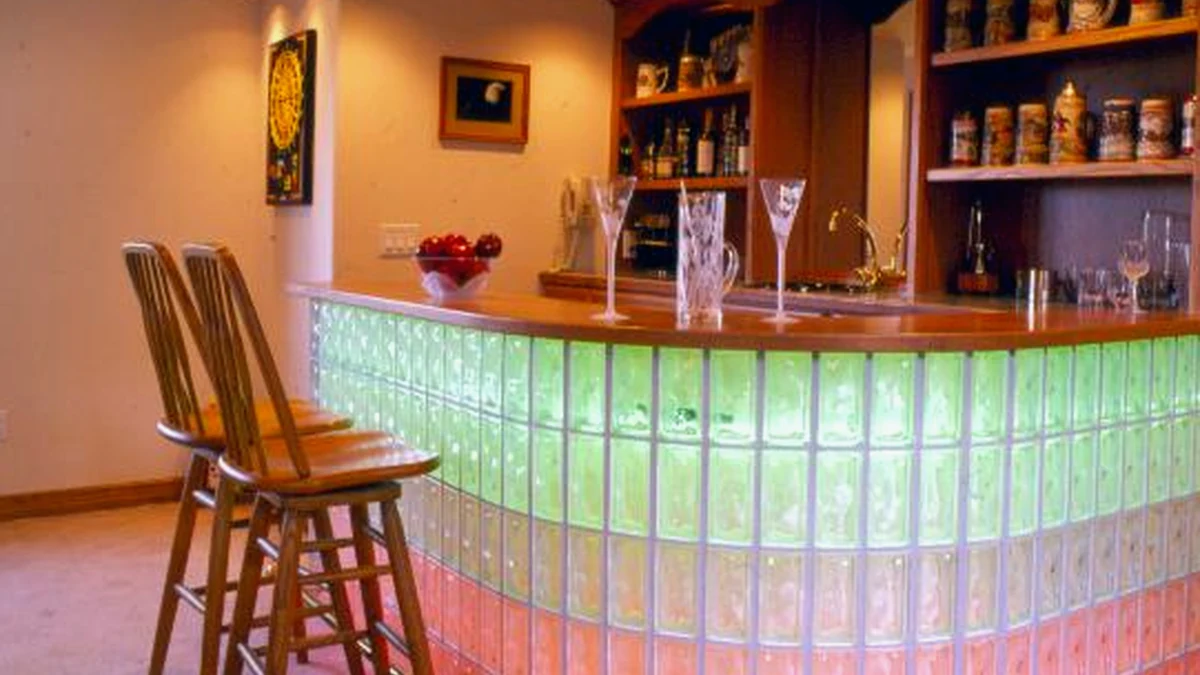
Hollow glass blocks derive their insulating performance from a sealed, dehydrated partial-vacuum cavity created during the high-temperature fusion of two glass halves. A standard 3-7/8-inch hollow unit exhibits a winter U-value of 0.51 (R-value 1.96), which roughly doubles the thermal resistance of single-pane glass. Because the interior air cavity contains virtually no moisture vapor, internal condensation between the two glass faces is impossible unless the perimeter fusion seal is physically fractured.
Where modern energy codes demand lower U-values in commercial or residential exterior walls, double-cavity or Low-E coated glass blocks incorporate a suspended polyester film or fiberglass insert inside the central cavity. These thermal-break units lower the U-value to 0.30 (R-value 3.33) and reduce interior surface condensation risk during sub-zero winter nights. Note that mortar joints act as minor thermal bridges; wider 3/8-inch mortar beds slightly raise overall whole-wall assembly U-values compared to 1/4-inch joints.
The following matrix summarizes laboratory-tested thermal, acoustic, and fire-endurance metrics across four primary glass block wall thicknesses.
| Block Specification | Nominal Depth | U-Value (Winter) | STC Acoustic Rating | UL Fire Rating |
|---|---|---|---|---|
| Thin-Line Hollow Block | 3-1/8 in (80mm) | 0.56 (R-1.79) | STC 35 | None (Non-rated) |
| Standard Premiere Hollow | 3-7/8 in (98mm) | 0.51 (R-1.96) | STC 39 - 41 | 45 minutes (with steel channel) |
| Thick-Face Heavy Hollow | 3-7/8 in (98mm) | 0.49 (R-2.04) | STC 44 | 60 minutes (UL listed) |
| Solid Glass Block (Vistabrik) | 3 in (76mm) | 0.87 (R-1.15) | STC 53 | 90 minutes (UL listed) |
Sound Transmission Class (STC) measures how effectively a wall assembly blocks airborne frequencies between 125 Hz and 4,000 Hz. Standard double-pane residential windows typically score between STC 26 and STC 30, leaving low-frequency traffic rumble audible indoors. Because a 4-inch hollow glass block wall weighs 20 pounds per square foot and lacks operable sash gaps, it achieves STC 39 to 41—cutting perceived urban traffic loudness by more than half.
Municipal building codes restrict conventional windows on zero-lot-line walls or commercial facades positioned within 3 to 5 feet of an adjacent property line to prevent fire spread between structures. Fire-rated thick-face hollow blocks (45- or 60-minute) and solid 3-inch glass blocks (90-minute) allow architects to bring natural daylight into stairwell shafts, corridor walls, and property-line elevations while passing NFPA 257 and UL 9 fire-hose stream tests.
Solid 3-inch glass block panels tested to ASTM E90 standards deliver an STC 53 acoustic barrier, outperforming 8-inch hollow concrete masonry units that remain ungrouted. -- Commercial Envelope Acoustic Ledger, 2026
When specifying glass block in jurisdictions enforcing strict IECC fenestration area caps, designers should treat decorative or basement glass block panels as daylighting fenestration rather than opaque wall area. Pairing Low-E thermal-insert blocks with perimeter foam thermal breaks ensures that daylighting gains do not trigger excessive heating penalties during winter months.
Standard 4-inch hollow glass blocks (R-1.96) perform slightly below modern Low-E argon double-pane windows (R-3.0+), but thermal-insert glass blocks match them at R-3.33 with far lower air leakage.
Yes. Standard 4-inch hollow glass blocks rate at STC 39 to 41, blocking significantly more traffic and siren noise than standard STC 28 operable windows.
No. Any vinyl vent, plastic spacer, or foam expansion strip voids the UL fire rating. Fire-rated panels must be solid mortar-set masonry with non-combustible perimeter packing.
Metro Glass Block catalogs 15 clear and tinted architectural block patterns in 2026, spanning 55% to 80% light transmission
Updated in 2026, this installation ledger maps 5 core glass block assembly types—from mortar-set basement bays to
Hollow 3-7/8-inch glass block basement windows deliver an R-1.96 thermal rating and STC 37 sound reduction, verified in 2026