Architectural Glass Block Patterns and Optical Specifications
Metro Glass Block catalogs 15 clear and tinted architectural block patterns in 2026, spanning 55% to 80% light transmission
2026 optical tests show Clarity glass blocks transmit 84 percent of visible daylight, while fluted Arctic and Regent patterns drop transmission to 52 percent.
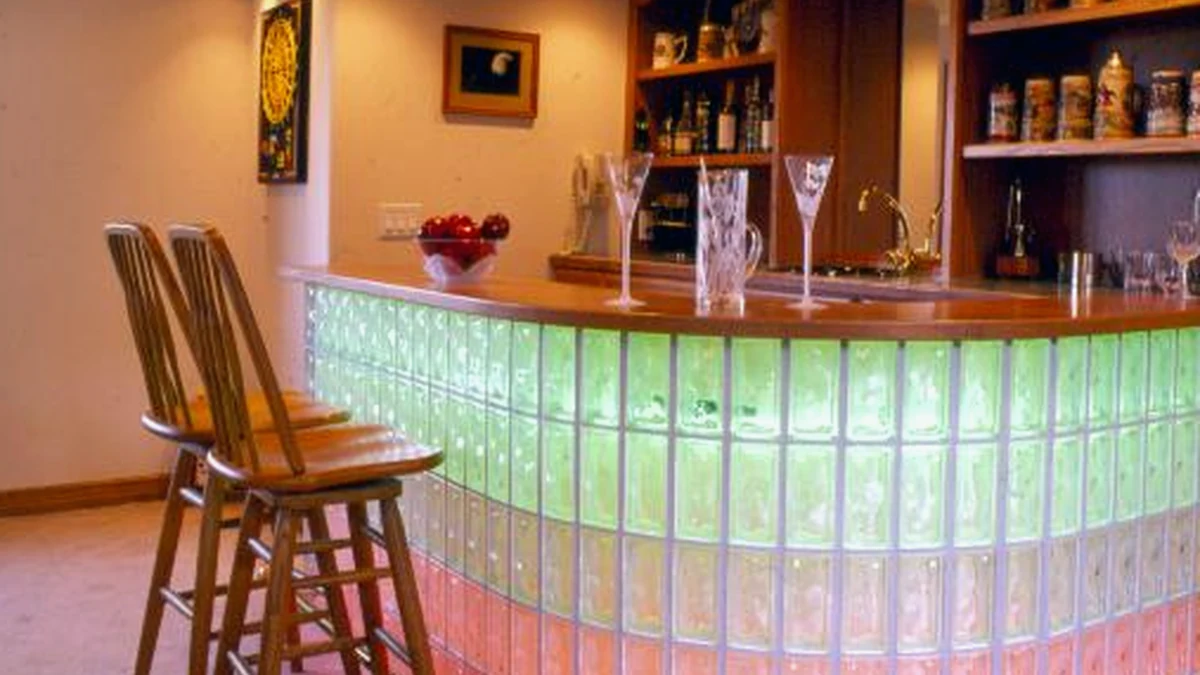
Architectural glass blocks are formed by fusing two pressed half-shells together at roughly 1,500 degrees Fahrenheit, sealing a partial vacuum inside the hollow cavity. The interior face texture pressed during molding dictates both visible light transmission (VLT) and object distortion. Smooth-faced patterns such as Clarity and Vue act like thick architectural glazing, permitting clear sightlines while preserving masonry mass. By contrast, undulating patterns like Wave, Welle, and Nubio refract incoming solar rays at varying angles, diffusing glare deep into interior rooms.
For Metro Glass Block specification schedules maintained since 2016, patterns are indexed on two independent axes: Visible Light Transmission percentage and a 1-to-5 Privacy Distortion Scale. Designers must avoid assuming that low light transmission always equals maximum privacy; fine parallel flutes such as X-Rib transmit 70 percent of daylight yet obscure silhouettes effectively when oriented vertically across shower enclosures or entry sidelights.
The table below consolidates measured optical and dimensional attributes for legacy Pittsburgh Corning and Weck glass block patterns commonly specified in residential and commercial retrofits.
| Pattern Name | Manufacturer Series | Visible Light Transmission | Privacy Rating (1-5) | Primary Architectural Use |
|---|---|---|---|---|
| Clarity / Vue | Pittsburgh Corning / Weck | 84% | 1 (Transparent) | Interior partitions, daylight corridors |
| Wave / Welle | Pittsburgh Corning / Weck | 75% | 3 (Medium Diffusion) | Basement windows, stairwells, sidelights |
| Nubio | Weck | 74% | 3.5 (Distorted) | Bathroom walls, commercial lobbies |
| X-Rib / Cross Ribbed | Weck | 70% | 4 (High Obscurity) | Shower enclosures, street-level windows |
| Arctic / Ice | Pittsburgh Corning / Weck | 52% | 5 (Maximum Privacy) | Restrooms, clinics, zero-sightline zones |
| Regent / Pearl | Weck | 65% | 4 (High Diffusion) | Decorative transoms, office dividers |
Beyond clear soda-lime glass, Weck and European manufacturers produce colored series including Nubio Blue, Nubio Green, Nubio Gray, Nubio Peach, Nubio Gold Tone, Turquoise, and Violet. These units fall into two manufacturing categories: through-body colored glass, where mineral oxides are mixed directly into the molten batch, and edge-coated blocks, where pigment is fired onto the inner perimeter flange. Through-body glass delivers uniform color saturation across the entire face, whereas edge-coated blocks create a luminous halo effect around a clear or wavy center.
South- and west-facing glass block elevations receive intense afternoon solar radiation. High-diffusion patterns such as Carlotta, Spray, and Pearl scatter direct beam sunlight into soft ambient illumination, reducing harsh contrast ratios near computer workstations. Selecting gray-tinted or bronze-tinted blocks lowers the Solar Heat Gain Coefficient (SHGC) from approximately 0.65 down to 0.42, cutting peak cooling loads in sun-exposed commercial facades without requiring exterior blinds.
In 2026 daylighting audits, undulating Wave patterns placed at clerestory height increased usable interior lux levels 18 feet from the perimeter wall by 31 percent compared to frosted flat glazing. -- Architectural Glazing Performance Review, 2026
Entry sidelights adjacent to exterior doors require a balance of daytime brightness and nighttime privacy when interior lights are illuminated. Patterns rated 4 or 5 on the privacy scale—specifically Arctic, X-Rib, or closely spaced Nubio—prevent clear silhouette recognition from the porch at night while still signaling interior occupancy. Pairing clear Wave field blocks with a vertical column of Blue or Goldtone accent blocks provides visual rhythm without compromising structural mortar continuity.
Arctic (also sold as Ice) and X-Rib patterns provide the highest privacy rating (4 to 5 out of 5), obscuring shapes even within 12 inches of the glass face.
Only when both units share the exact same metric or imperial thickness (such as 3-7/8 inches) and face dimension (7-3/4 inches square).
Through-body colored glass blocks (using cobalt, iron, or selenium oxides) do not fade under UV exposure. Interior-coated blocks should be installed with white mortar to preserve edge brilliance.
Metro Glass Block catalogs 15 clear and tinted architectural block patterns in 2026, spanning 55% to 80% light transmission
Updated in 2026, this installation ledger maps 5 core glass block assembly types—from mortar-set basement bays to
Hollow 3-7/8-inch glass block basement windows deliver an R-1.96 thermal rating and STC 37 sound reduction, verified in 2026